ANA Positive Result – When Should We Worry?

An ANA Positive Result – When Should We Worry? is a question many people ask after receiving unexpected lab results. Seeing “positive” on a medical test can feel alarming, but here’s the truth: a positive ANA test does not always mean disease.

Let’s break this down in a clear and simple  way so that you know exactly when to stay calm—and when to take action.

ANA Positive Result – When Should We Worry?

What Is an ANA Test?

Understanding Antinuclear Antibodies

Antinuclear antibodies (ANA) are proteins made by your immune system. Normally, your immune system protects your body from infections. But sometimes, it mistakenly attacks your own cells—this is called an autoimmune response.

The ANA test checks if these antibodies are present in your blood.

Why Doctors Order an ANA Test

Doctors usually recommend an ANA test when symptoms suggest an autoimmune condition, such as:

  • Persistent fatigue
  • Joint pain
  • Skin rashes
  • Unexplained feve

What Does an ANA Positive Result Mean?

Normal vs Abnormal ANA Levels

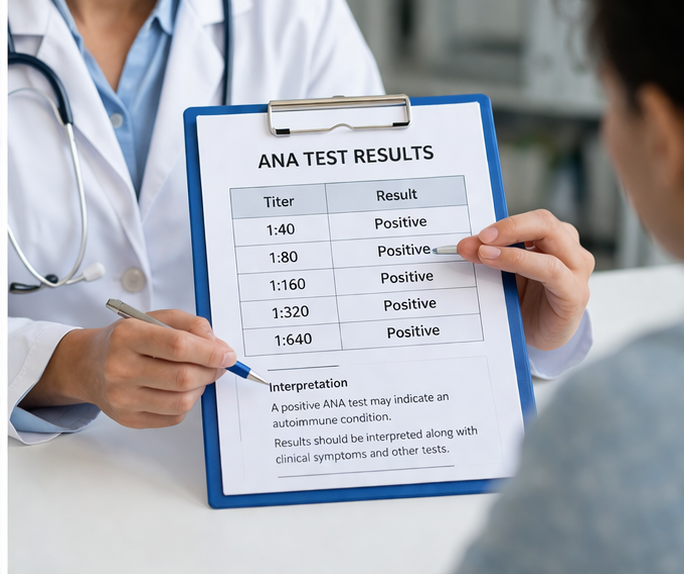
ANA results are reported in titers (like 1:40, 1:160, etc.):

  • Low titer (1:40 or 1:80): Often normal, especially in healthy people
  • Moderate titer (1:160): May need further evaluation
  • High titer (1:320 or higher): More likely linked to autoimmune disease

False Positives Explained

Here’s something surprising: up to 20–30% of healthy individuals may have a positive ANA test.

Common reasons include:

  • Aging
  • Infections
  • Certain medications
  • Temporary immune responses

ANA Positive Result – When Should We Worry?

This is the key question.

Key Warning Signs to Watch

You should be more concerned if a positive ANA result comes with:

  • Chronic joint swelling
  • Butterfly-shaped facial rash
  • Severe fatigue that doesn’t improve
  • Kidney issues
  • Chest pain or breathing problems

High Titer vs Low Titer Results

  • Low ANA + No symptoms: Usually nothing to worry about
  • High ANA + Symptoms: Needs further investigation

 The combination of lab results + symptoms is what truly matters.

Common Conditions Linked to Positive ANA

Lupus and Its Connection

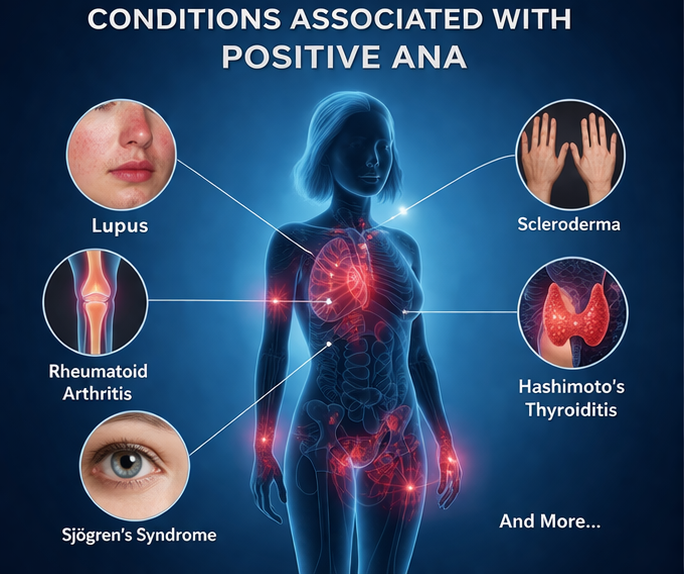
One of the most well-known conditions associated with ANA is Systemic Lupus Erythematosus.

  • Nearly all lupus patients test ANA positive
  • However, not all ANA-positive individuals have lupus

Other Autoimmune Diseases

A positive ANA can also be seen in:

  • Rheumatoid Arthritis
  • Sjögren’s Syndrome
  • Scleroderma
  • Hashimoto’s Thyroiditis

Symptoms That May Accompany ANA Positivity

Mild Symptoms

Some people experience mild signs such as:

  • Occasional fatigue
  • Mild joint discomfort
  • Sensitivity to sunlight

Severe Symptoms

More serious symptoms include:

  • Persistent swelling
  • Organ involvement (kidneys, lungs)
  • Neurological issues

Causes of a Positive ANA Test

Autoimmune Triggers

  • Genetic predisposition
  • Hormonal factors
  • Environmental triggers

Non-Autoimmune Causes

Not all causes are serious:

  • Viral infections
  • Certain antibiotics
  • Chronic stress

How Doctors Interpret ANA Results

Additional Tests Required

A positive ANA is just the beginning. Doctors often order:

  • Anti-dsDNA
  • ENA panel
  • Complement levels

Role of Medical History

Your doctor will always consider:

  • Symptoms
  • Family history
  • Physical exam

A diagnosis is never based on ANA alone.

Should You Be Concerned About a Positive ANA?

When It’s Harmless

You don’t need to worry if:

  • You have no symptoms
  • ANA titer is low
  • Other tests are normal

When It Requires Immediate Attention

Seek medical advice if:

  • Symptoms are worsening
  • ANA levels are high
  • Multiple abnormal tests appear

Treatment and Management Options

Monitoring Without Treatment

Many people only need:

  • Regular check-ups
  • Symptom tracking

Medications and Therapies

If an autoimmune disease is diagnosed, treatment may include:

  • Anti-inflammatory drugs
  • Immunosuppressants
  • Lifestyle changes

Lifestyle Tips for Managing ANA Positivity

Diet and Nutrition

  • Eat anti-inflammatory foods (fruits, vegetables, omega-3s)
  • Avoid processed foods

Stress and Immune Health

Stress can worsen immune responses. Try:

    • Meditation
    • Light exercise
    • Good sleep habits

How Accurate Is the ANA Test?

Limitations of the Test

  • Not disease-specific
  • Can produce false positives

Improving Diagnostic Accuracy

Doctors combine ANA with:

  • Clinical symptoms
  • Advanced lab tests

Frequently Asked Questions (FAQs)

1. Can a positive ANA go away?

Yes, in some cases it may fluctuate or even become negative over time.

2. Is a positive ANA always lupus?

No. Many people with positive ANA never develop lupus.

3. What ANA level is considered dangerous?

High titers (1:320 or above) with symptoms are more concerning.

4. Can stress cause a positive ANA?

Stress may influence immune activity but is rarely the sole cause.

5. Should I repeat the ANA test?

Only if your doctor recommends it based on symptoms.

6. Can healthy people have a positive ANA?

Yes, especially at low levels.

An ANA Positive Result – When Should We Worry? depends on the bigger picture—not just the test itself.

✔️ No symptoms + low ANA: Usually harmless
⚠️ Symptoms + high ANA: Needs medical attention

The key takeaway? Don’t panic—but don’t ignore it either. Work closely with your doctor to understand what your result truly means.

Scroll to Top