Types of Roundworms: Classification, Cure & Prevention Guide

Roundworms are among the most common parasites of humans. Some live in the gut, some burrow through skin, some hide in muscle and one travels by mosquito. This guide introduces eight important species, with a labelled diagram, the source of infection, treatment and prevention for each.

What are roundworms?

Roundworms, or nematodes (phylum Nematoda), have unsegmented, cylindrical bodies covered by a tough cuticle. They have separate sexes, with females usually larger than males, and a complete digestive tract running from mouth to anus. Their life cycle moves from egg to larva to adult. Parasitic species are most common in regions with limited sanitation, but some, such as pinworm and Toxocara, occur worldwide.

Classification of roundworms

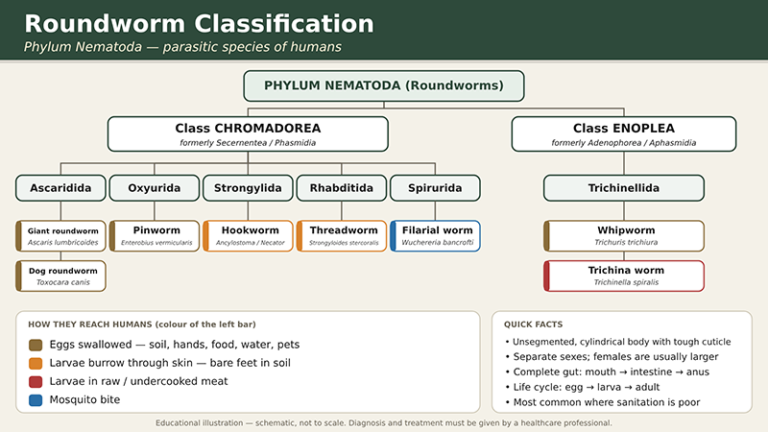
Classification of Roundworms

Parasitic nematodes of humans fall into two classes. Chromadorea (formerly Secernentea) contains the orders Ascaridida, Oxyurida, Strongylida, Rhabditida and Spirurida. Enoplea (formerly Adenophorea) contains the order Trichinellida, which includes whipworm and Trichinella.

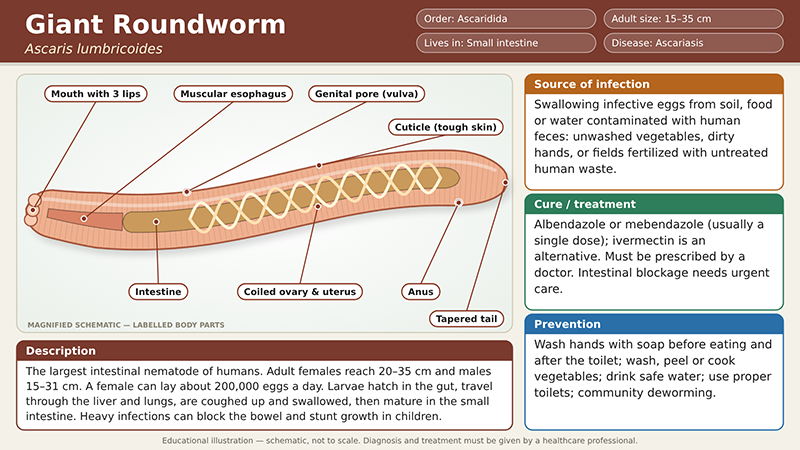
Ascaris Lumbricoides
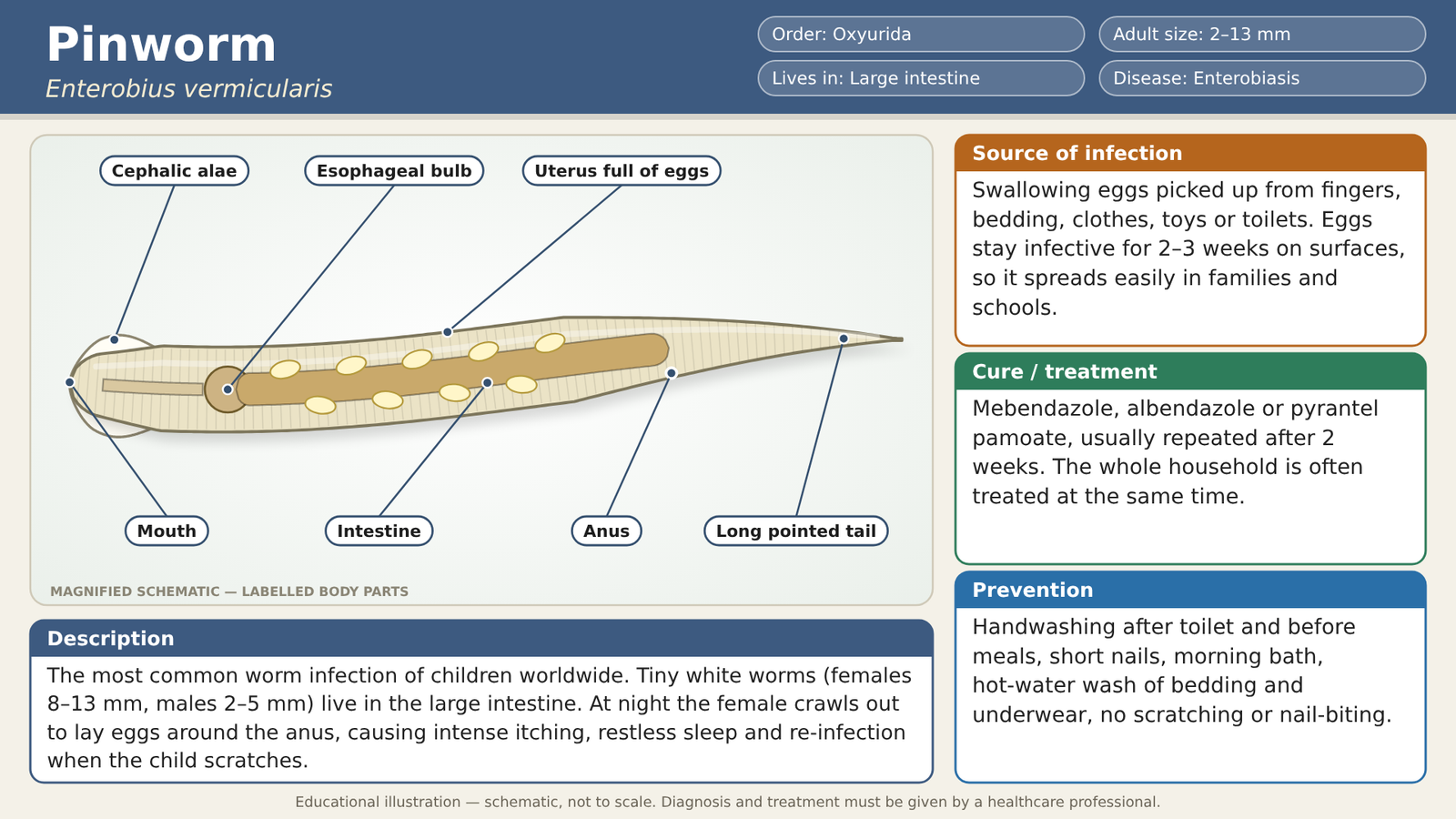
Pinworm
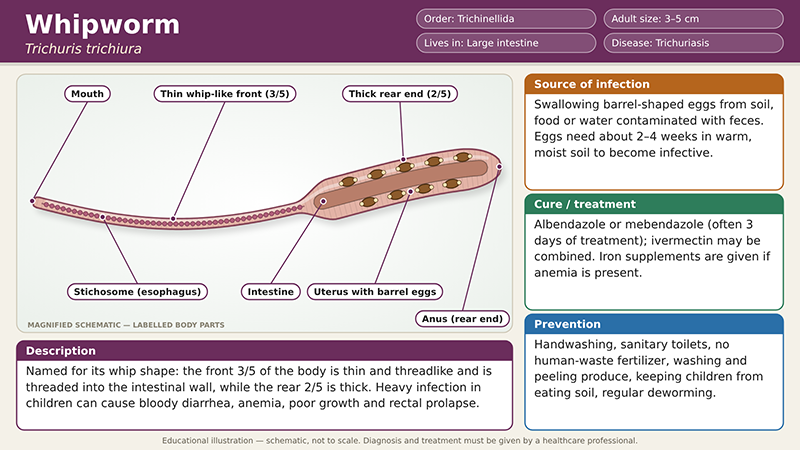
Whipworm
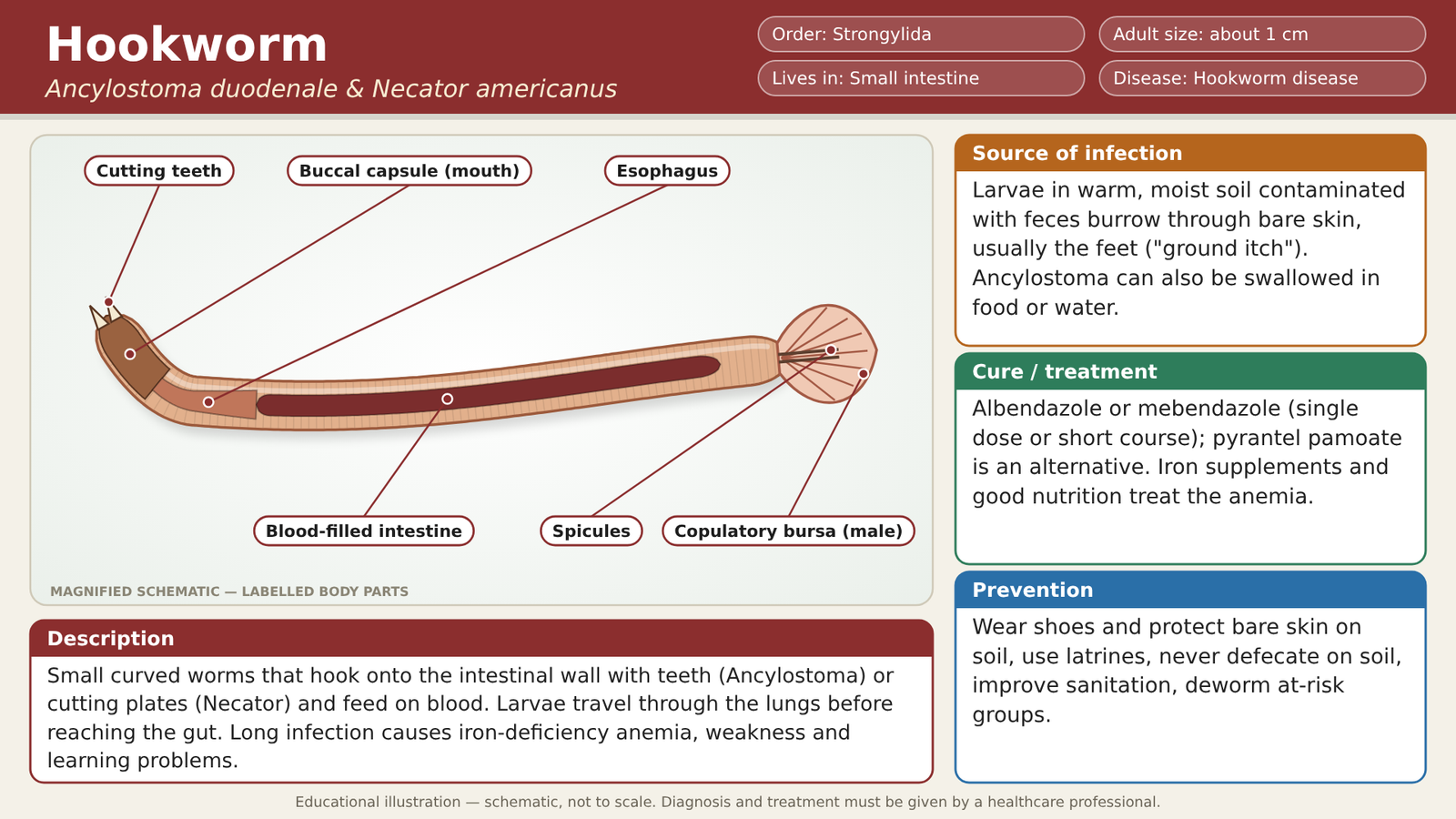
Hookworm
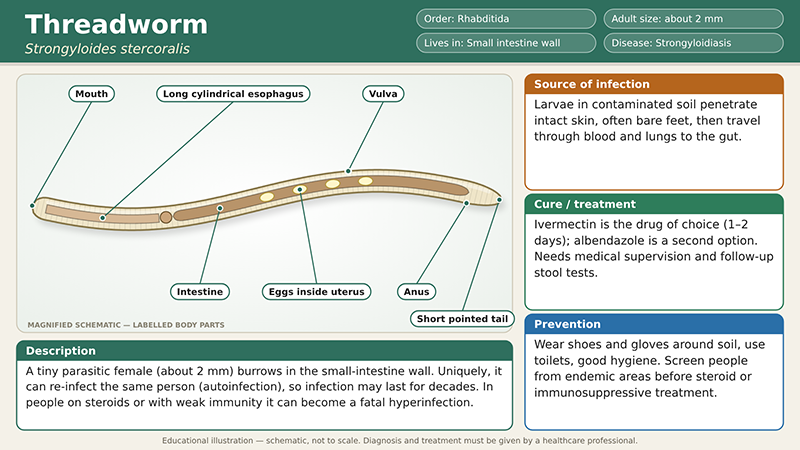
Strongeloides
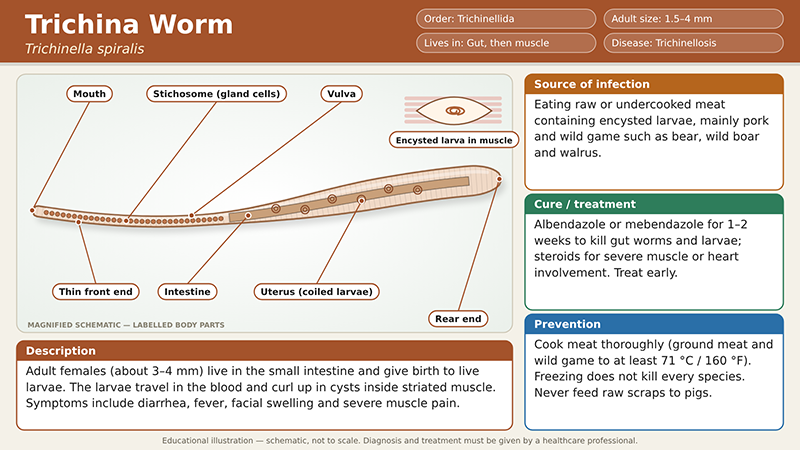
Trichinella
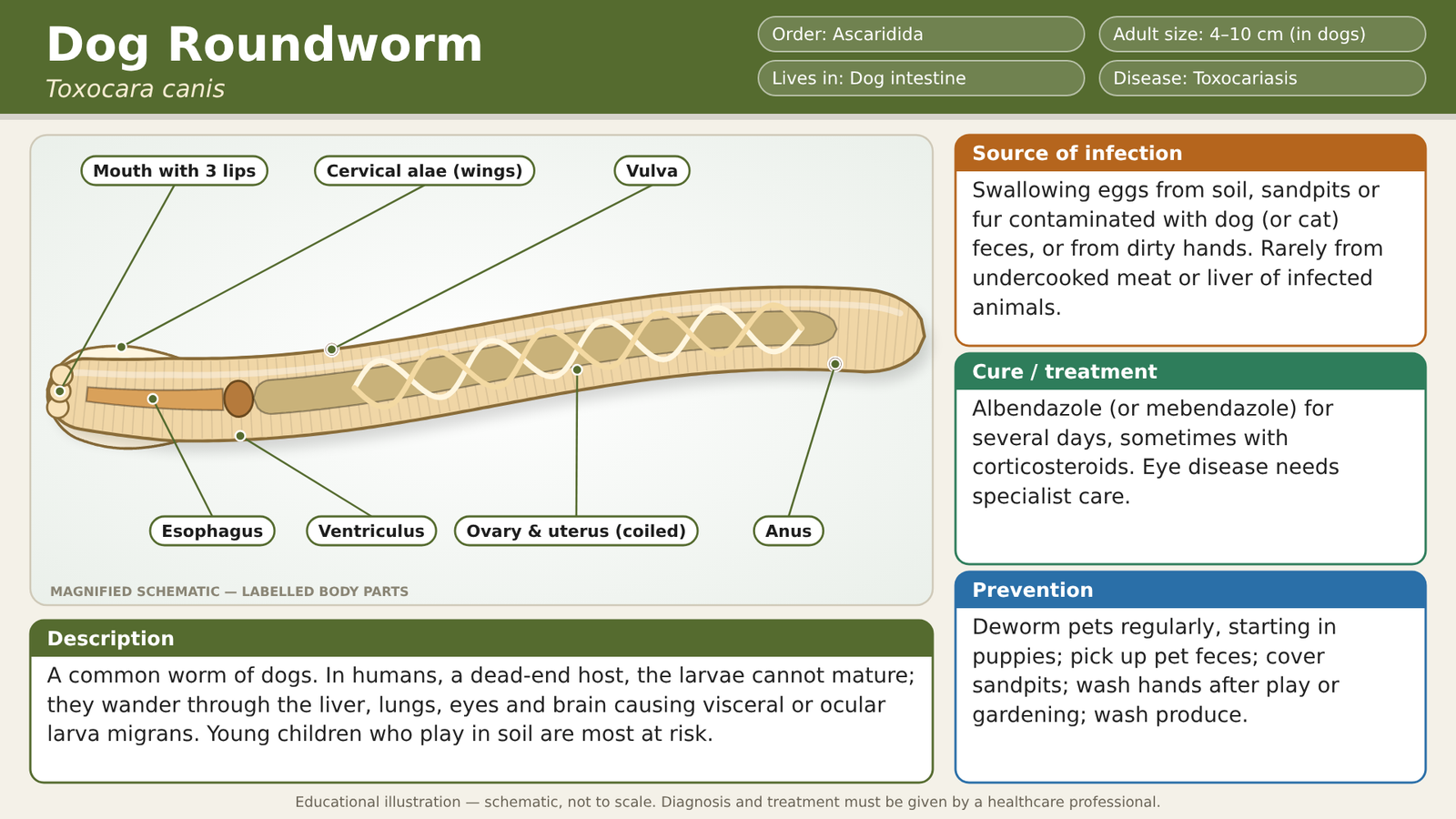
Toxocara
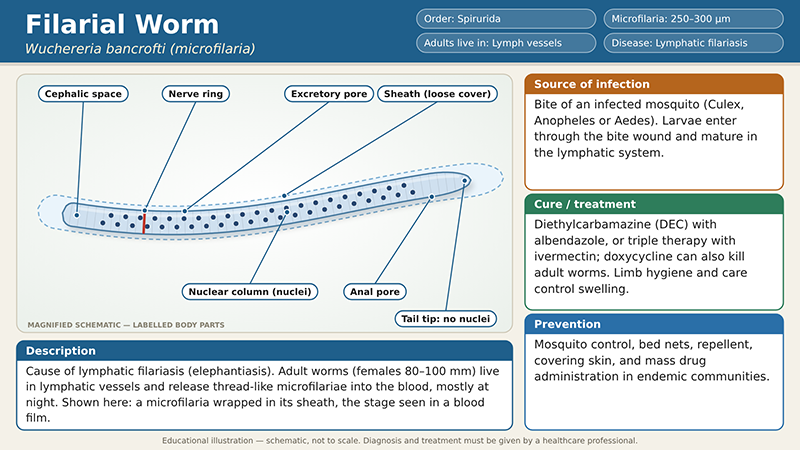
Wuchereria

Quick comparison of the eight worms

WormHow it infectsCommon treatment
Giant roundwormEggs from contaminated soil, food, waterAlbendazole / mebendazole
PinwormEggs from fingers, bedding, surfacesMebendazole / albendazole / pyrantel
WhipwormEggs from contaminated soil, foodAlbendazole / mebendazole
HookwormLarvae through bare skinAlbendazole / mebendazole
ThreadwormLarvae through bare skinIvermectin
Trichina wormRaw or undercooked meatAlbendazole / mebendazole
Dog roundwormEggs from pet-contaminated soilAlbendazole / mebendazole
Filarial wormMosquito biteDEC, albendazole, ivermectin

General prevention checklist

  • Wash hands with soap after using the toilet and before handling food.
  • Drink safe water and wash, peel or cook produce.
  • Wear shoes where soil may be contaminated.
  • Cook meat thoroughly, especially pork and wild game.
  • Deworm pets regularly and pick up their feces.
  • Use bed nets and repellent in mosquito-prone areas.
  • Support community deworming and sanitation programs.

Frequently asked questions

What are roundworms?

Roundworms (nematodes) are unsegmented, cylindrical worms with a complete digestive tract. Many are free-living, but several species parasitize humans.

How do people catch roundworms?

Through four main routes: swallowing eggs (soil, hands, food, water, pets), larvae burrowing through skin, eating undercooked meat, or being bitten by an infected mosquito.

Are roundworm infections curable?

Most are treated effectively with anthelmintic medicines such as albendazole, mebendazole, pyrantel or ivermectin. The right drug depends on the species, so a doctor should diagnose and prescribe.

What is the best way to prevent roundworms?

Handwashing, safe water, proper sanitation, wearing shoes on soil, thorough cooking of meat, deworming pets and mosquito control, matched to the worm in question.

Medical disclaimer: This article is for education only and is not medical advice. Diagrams are schematic and not to scale. See a healthcare professional for diagnosis and treatment.

#Roundworms #Nematodes #ParasiticWorms #IntestinalWorms #Ascaris #Pinworm #Hookworm #Whipworm #Parasitology #PublicHealth #HealthEducation #Deworming #WormPrevention #LymphaticFilariasis

Scroll to Top