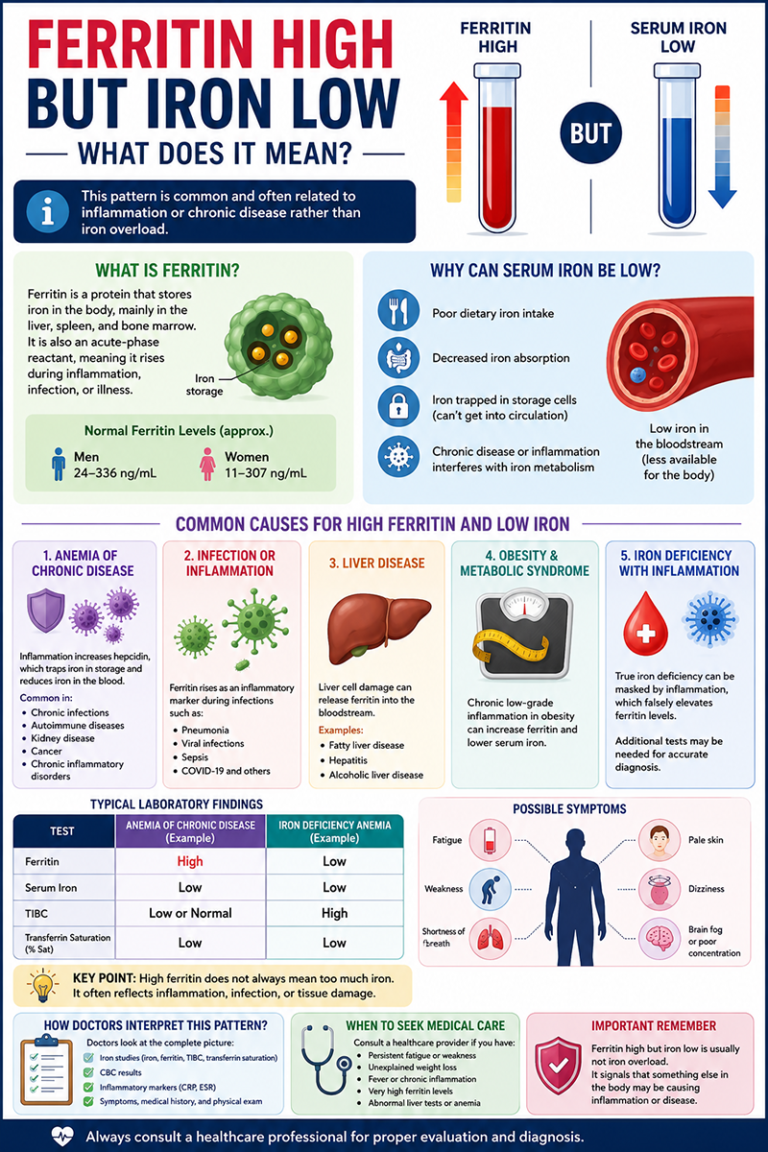
Ferritin High but Iron Low — What Does It Mean?

Iron studies can sometimes produce confusing results. One of the most misunderstood patterns is when ferritin is elevated but serum iron is low. At first glance, this combination may seem contradictory. However, it actually happens in several medical conditions and often points toward inflammation or chronic disease rather than simple iron overload.

Understanding this laboratory pattern can help clinicians, laboratory professionals, and patients interpret iron studies more accurately.

What Is Ferritin?

Ferritin is a protein that stores iron inside the body. It acts as the body’s iron reserve and is mainly found in the liver, spleen, and bone marrow.

When doctors request iron studies, ferritin is commonly included because it helps estimate how much iron is stored in the body.

Normal Ferritin Levels

Normal ranges may vary slightly between laboratories:

  • Men: approximately 24–336 ng/mL
  • Women: approximately 11–307 ng/mL

However, ferritin is more than just an iron marker. It is also an acute-phase reactant, meaning it rises during inflammation, infection, or illness.

High Ferritin with low Iron l

What Does Low Serum Iron Mean?

Serum iron measures the amount of circulating iron in the blood. Low serum iron may occur when:

  • Iron intake is poor
  • Iron absorption decreases
  • Iron becomes trapped inside storage cells
  • Chronic disease interferes with iron metabolism

This means a person may technically have iron stored in the body but still have low usable iron in circulation.

Why Can Ferritin Be High While Iron Is Low?

Several medical conditions can cause this laboratory pattern.

1. Anemia of Chronic Disease

This is one of the most common causes.

During chronic inflammation, the body releases cytokines that increase hepcidin production. Hepcidin prevents iron from leaving storage sites.

As a result:

  • Ferritin becomes elevated
  • Serum iron decreases
  • Transferrin saturation falls

Common associated conditions include:

  • Chronic infections
  • Autoimmune diseases
  • Kidney disease
  • Cancer
  • Chronic inflammatory disorders

Typical Laboratory Findings

Test

Result

Ferritin

High

Serum Iron

Low

TIBC

Low or normal

Transferrin Saturation

Low

2. Infection or Inflammation

Ferritin rises during infections because it behaves as an inflammatory marker.

Even temporary illnesses such as:

  • Pneumonia
  • Viral infections
  • Sepsis
  • COVID-19

can increase ferritin significantly while lowering serum iron temporarily.

3. Liver Disease

The liver stores ferritin. When liver cells become damaged, ferritin may leak into the bloodstream.

Conditions include:

  • Fatty liver disease
  • Hepatitis
  • Alcoholic liver disease

In these situations, serum iron may still remain low despite elevated ferritin.

4. Obesity and Metabolic Syndrome

Chronic low-grade inflammation associated with obesity can increase ferritin levels.

Many patients with obesity may show:

  • Elevated ferritin
  • Low serum iron
  • Mild anemia

This pattern does not always indicate iron overload.

5. Iron Deficiency with Concurrent Inflammation

Sometimes a patient truly has iron deficiency, but inflammation falsely elevates ferritin.

This situation can make diagnosis difficult.

Doctors may request additional tests such as:

  • Transferrin saturation
  • Soluble transferrin receptor
  • C-reactive protein (CRP)
  • Reticulocyte hemoglobin content

Symptoms Patients May Experience

Symptoms usually relate to iron deficiency or the underlying disease.

Common symptoms include:

  • Fatigue
  • Weakness
  • Shortness of breath
  • Pale skin
  • Brain fog
  • Dizziness
  • Chronic inflammation symptoms

How Doctors Interpret Iron Studies Together

Ferritin should never be interpreted alone.

A complete iron panel often includes:

  • Serum iron
  • Ferritin
  • TIBC (Total Iron Binding Capacity)
  • Transferrin saturation

Doctors also consider:

  • CBC results
  • CRP or ESR
  • Clinical symptoms
  • Medical history

Important Laboratory Insight

A high ferritin level does not always mean excess iron.

In many cases, elevated ferritin actually reflects:

  • Inflammation
  • Infection
  • Tissue damage
  • Chronic disease

This is why laboratory correlation is essential

When Should You Be Concerned?

Medical evaluation is important if ferritin remains persistently elevated, especially when accompanied by:

  • Unexplained fatigue
  • Weight loss
  • Fever
  • Liver abnormalities
  • Severe anemia
  • Very high ferritin levels

Healthcare providers may investigate for:

  • Autoimmune diseases
  • Hemochromatosis
  • Chronic infections
  • Liver disease
  • Malignancy

Important Points to Remember

Ferritin high but iron low is a common yet confusing laboratory pattern. In many cases, it reflects inflammation or chronic disease rather than iron overload.

Because ferritin acts as both an iron storage protein and an inflammatory marker, healthcare professionals must interpret it carefully alongside other laboratory tests and the patient’s clinical condition.

Understanding this pattern helps prevent misdiagnosis and supports more accurate patient care

References:

  1. World Health Organization (WHO) – Iron Deficiency Anaemia
  2. Henry’s Clinical Diagnosis and Management by Laboratory Methods
  3. Tietz Fundamentals of Clinical Chemistry and Molecular Diagnostics
  4. American Society of Hematology (ASH)
Scroll to Top